Industry Trends
•
September 2023
February 2026
Remote Motorized Lenses: Advantages, Use Cases, and Industry Applications
Remote motorized lenses—lenses with electronically controlled focus, zoom, and iris—are a practical upgrade in vision systems where consistency, uptime, and repeatability matter. Instead of physically adjusting optics on the line (or sending a technician to a hard-to-reach camera), teams can dial in image parameters remotely, save settings, and quickly return to known configurations.
What is a Remote Motorized Lens?
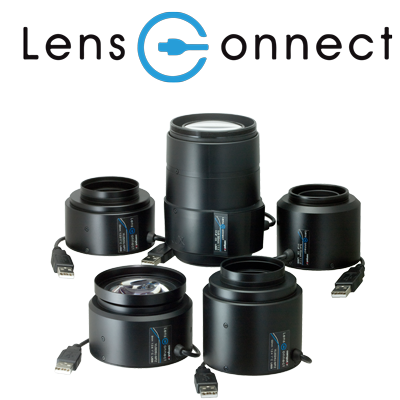
A remote motorized lens integrates motors and control electronics into the lens assembly so focus (sharpness), zoom (field of view/magnification), and iris (aperture, affecting brightness and depth of field) can be adjusted through a controller or software interface. That makes motorized lenses especially useful for cameras mounted inside enclosures, behind guarding, on moving equipment, or in controlled environments where access is limited and adjustments are costly.
Advantages
Faster Setup and Changeovers
One of the biggest advantages is faster setup and changeovers. When product mix changes—or multiple SKUs share a line—manual lens tweaking can become a recurring bottleneck. Remote adjustment reduces the time spent dialing in framing and sharpness, helping teams get back to stable inspection performance with less downtime.
Repeatability Through Recipe-Based Imaging
Manual adjustments vary by operator and circumstance; remote motorized control makes it easier to store ideal settings and return to them reliably. That consistency often improves first-pass yield, reduces false rejects caused by marginal images, and lowers dependence on a single "vision expert" to adjust parameters..
Remote Serviceability and Reduced Maintenance Visits
When cameras are mounted overhead, inside safety guarding, in cleanrooms, or in other difficult locations, many imaging issues can be diagnosed and corrected without a physical visit. Reducing maintenance callouts and shortening mean time to repair helps improve overall equipment effectiveness, particularly across multiple lines or sites.
Managing Drift from Real-World Conditions
Motorized control can help teams respond to drift caused by vibration, temperature changes, gradual mechanical settling, or evolving lighting conditions. Instead of letting image quality slowly degrade until it triggers scrap or misreads, operators can adjust focus, iris, or zoom as conditions change, often with less disruption to production.
Handling Variable Working Distances
If the camera-to-target distance changes due to moving stages, robot arms, different pallet heights, or product variations, the ability to adjust focus and zoom remotely helps maintain consistent framing and sharpness—supporting reliable measurement and inspection where manual intervention would otherwise be required.
Safety and Compliance Benefits
If adjustments normally require opening guards, stopping equipment, climbing to elevated stations, or entering controlled areas, remote tuning can reduce lockout/tagout events and limit exposure during troubleshooting and optimization.
Industries That Commonly See Strong ROI
Manufacturing and industrial automation frequently benefit from multi-SKU inspection, gauging, print/label verification, and assembly checks. Electronics and semiconductor-related inspection also tends to see strong payback, since small-feature imaging is sensitive to focus stability and repeatability. Logistics and distribution operations benefit where overhead and hard-to-access read/measure stations are common. Food and beverage environments benefit because washdown and sanitation can shift setups and make access more complicated. Pharmaceuticals and medical devices often benefit from repeatable verification that supports quality systems. Automotive and tier suppliers benefit in high-uptime environments with many variants. Energy and utilities can benefit from remote adjustments when travel time and site access make them particularly valuable.
How to Estimate ROI
A simple way to estimate ROI is to quantify the current cost of the lens adjustment. That typically includes minutes of downtime per changeover multiplied by changeover frequency and cost per minute, the number of maintenance visits avoided (labor and travel), yield impacts (scrap, rework, false rejects), and the time saved when deploying or re-tuning stations. In high-throughput environments, even small reductions in adjustment time or service interruptions can justify the rapid adoption of motorized lenses.
Conclusion
Remote motorized lenses are less about convenience and more about operational control—repeatable imaging, faster changeovers, and fewer interruptions due to access constraints. For teams focused on uptime and consistent inspection performance, they can be a high-leverage way to improve OEE and reduce the total cost of ownership.
Computar's LensConnect Series
If you're looking for a concrete implementation, Computar's LensConnect series is designed around these same outcomes—remote control of focus/zoom/iris, repeatable settings for faster setup, and reduced need for on-site adjustments—making it well-suited to systems where uptime, limited access, andmulti-recipe operation drive ROI.
Features and models:
- Suitable for large-format sensors (IMX183)
- Floating focus design for ultra-high resolution
- The only machine vision lens with optical zoom functionality
- Fixed models: 8mm, 12mm, 16mm, 25mm, 35mm, 50mm, and 75mm
- Varifocal models: 4mm-10mm, 9mm-50mm, 12-36mm, 16mm-96mm, and 25-50mm
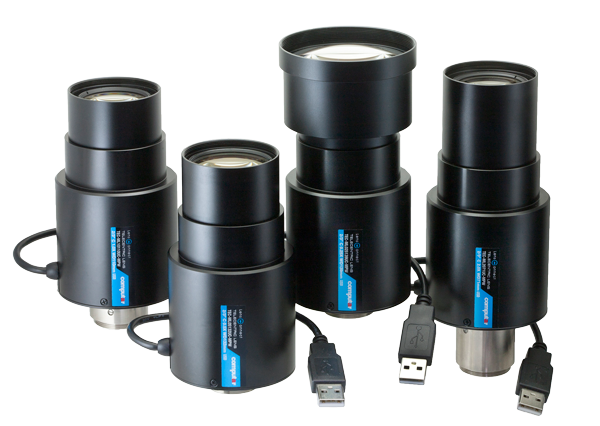
The LensConnect series is engineered to enable power supply and control through USB. This innovative Plug-and-Play lens series allows remote adjustments of the zoom*, focus, or iris and comes with a simple setup software compatible with Windows or Linux (*zoom adjustment for varifocal models only).
The remote control is easy to achieve - even without any prior knowledge of the lens. The floating focus design delivers ultra-high resolution from near to far, and stepper motors enable precise focus control and high repeatability.
Next Steps
To explore specifications, supported configurations, andoptions for integrating remote lens control into your vision system,visit the LensConnect series page, contact us,or request a demo.
Sources:
- computar.com, The Intelligent Eye: How Motorized Lenses Are Fueling the Next Wave of Automation
- computar.com/lensconnect, The LensConnect Series